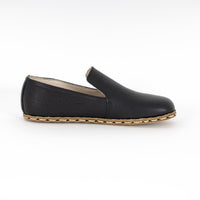
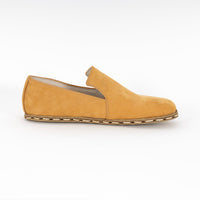
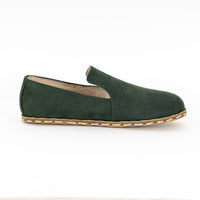
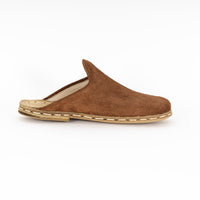
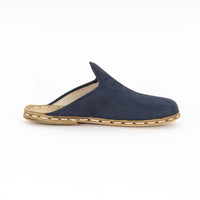
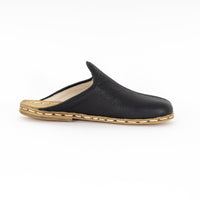
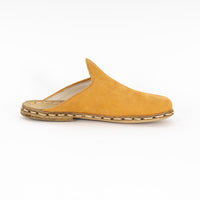
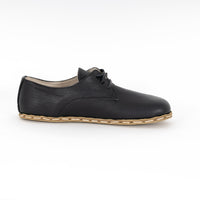
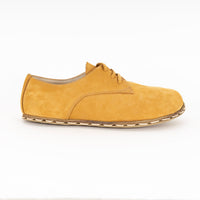
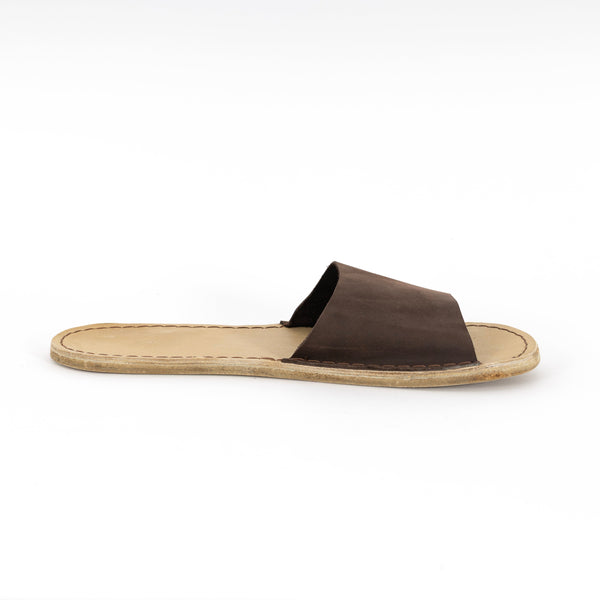
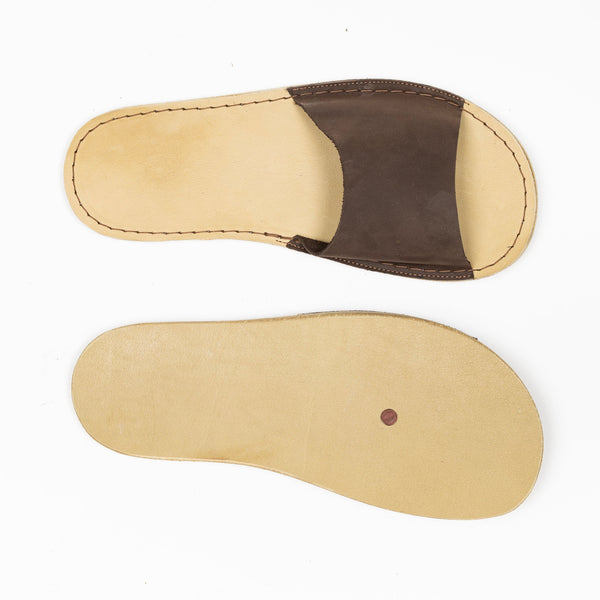
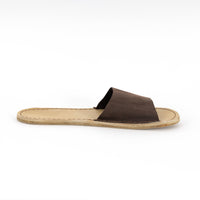
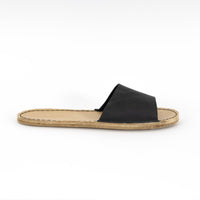
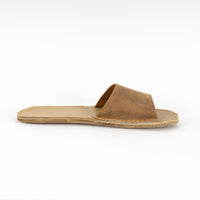
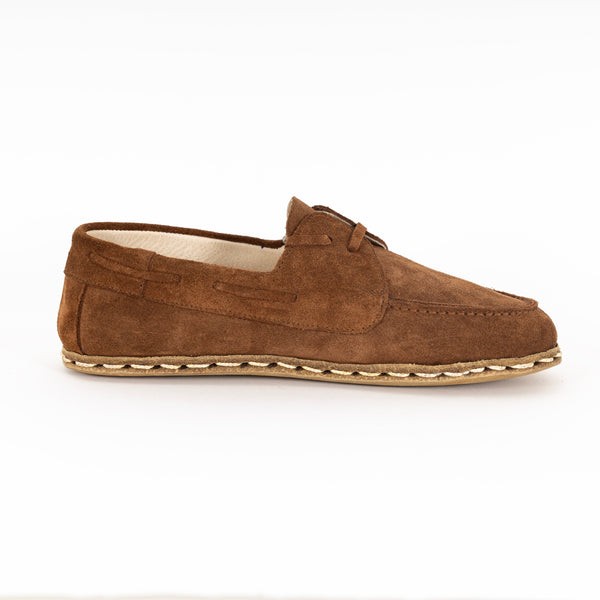
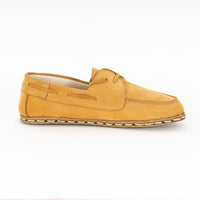
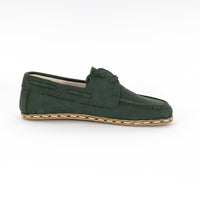
The earth carries a mild negative electrical charge. Skin conducts. When your foot meets soil, grass, sand or wet rock, your body and the ground settle at the same electrical potential — the way they did for every barefoot generation before ours.
Almost every shoe made since the 1950s breaks that contact on purpose. Rubber and synthetic foam are insulators; blocking current is what they are good at. Stand on a lawn in ordinary trainers and, electrically speaking, you are not standing on it at all.
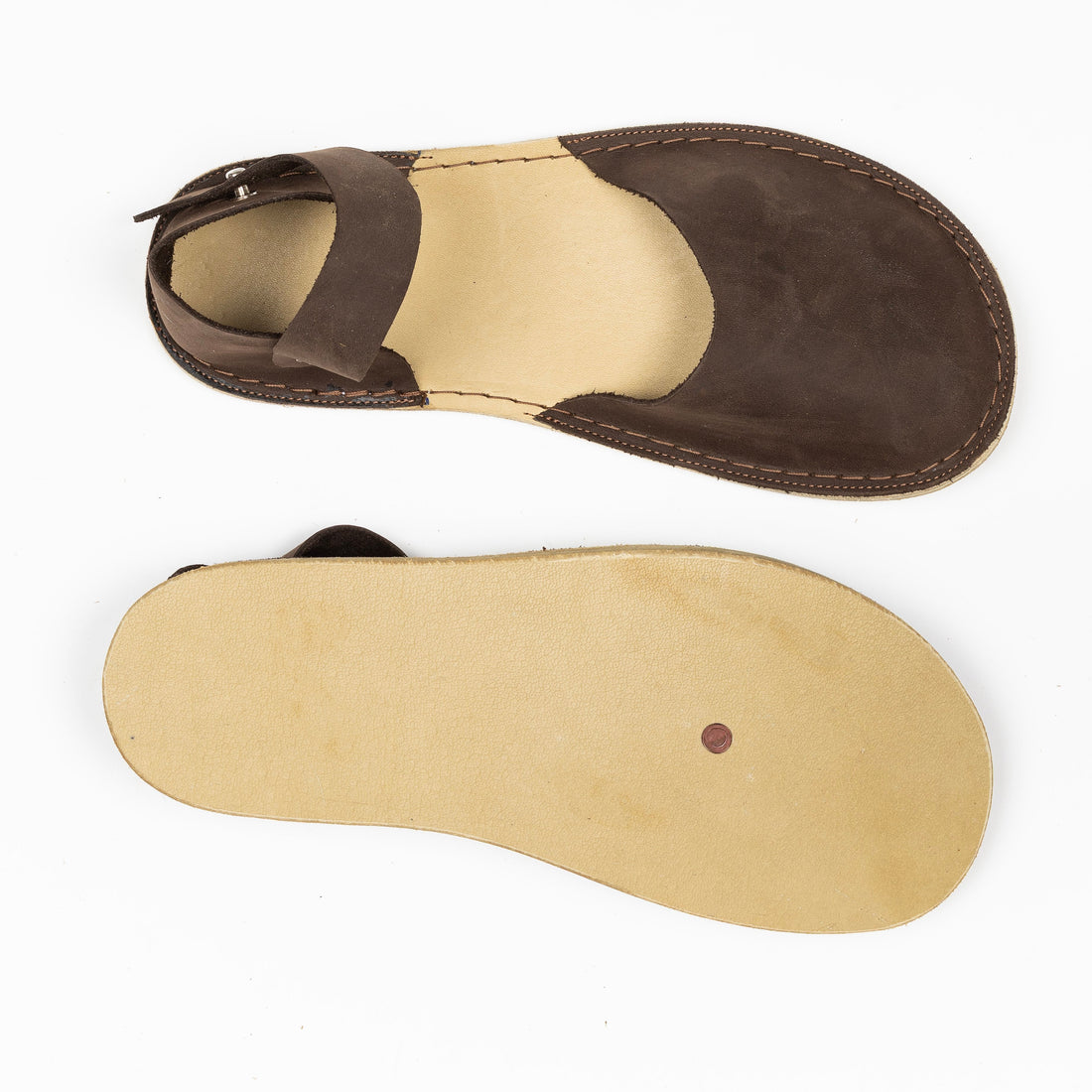
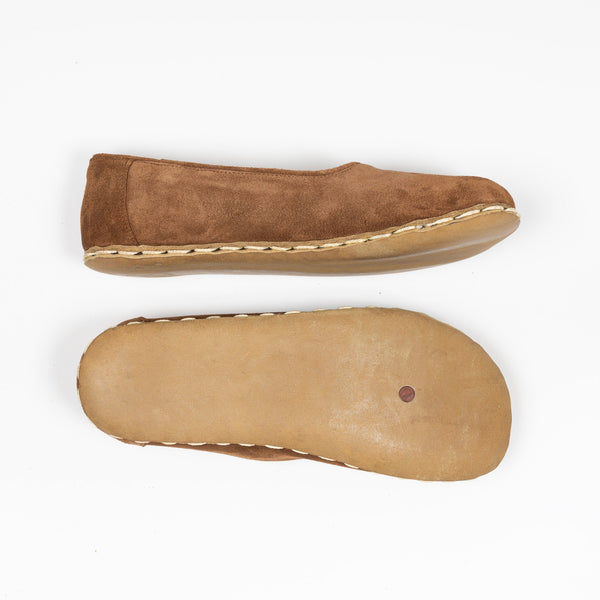
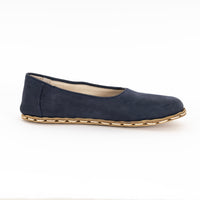
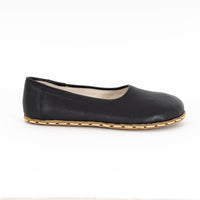
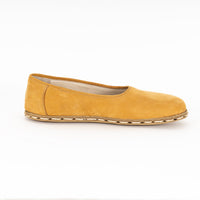
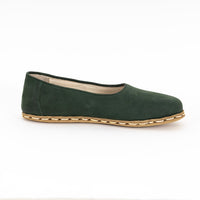
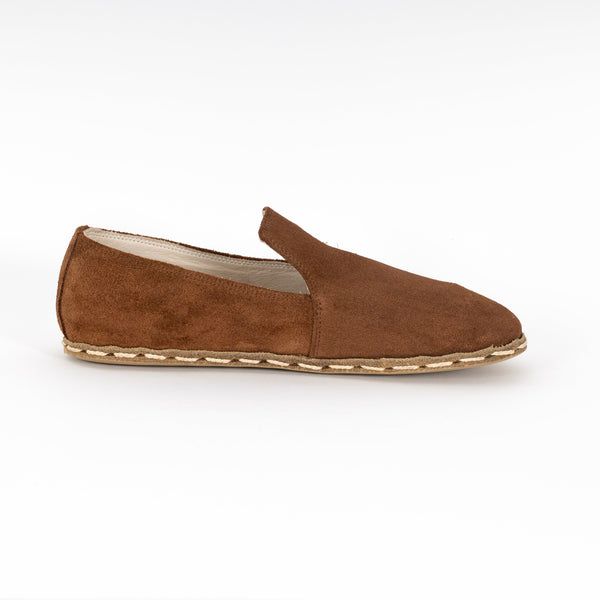
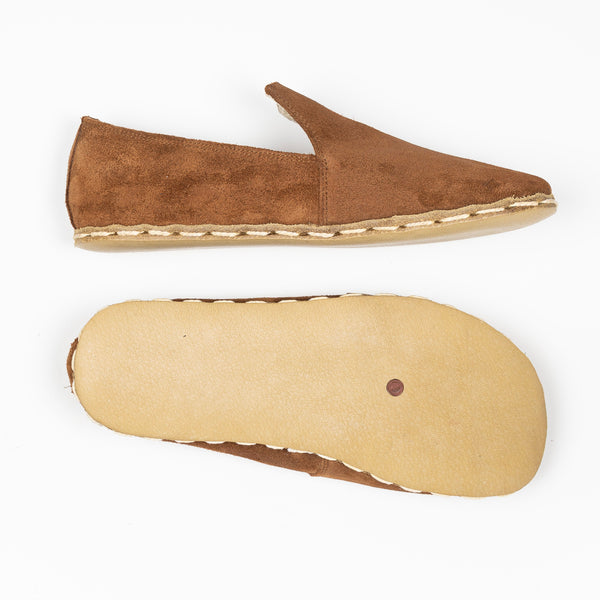
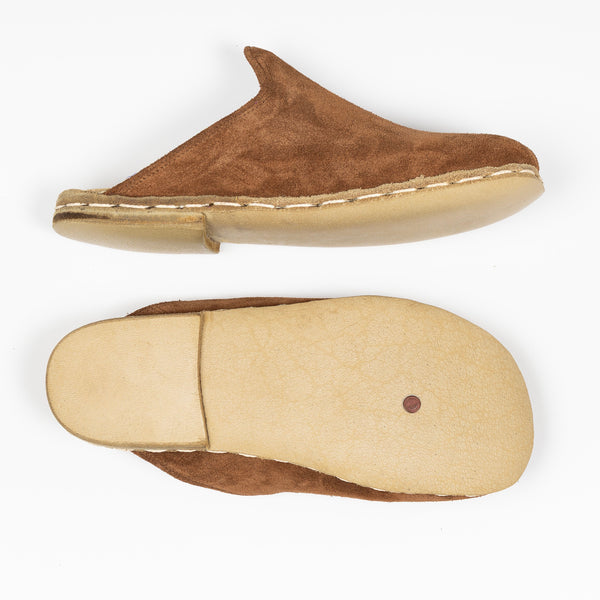
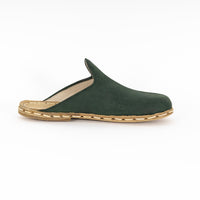
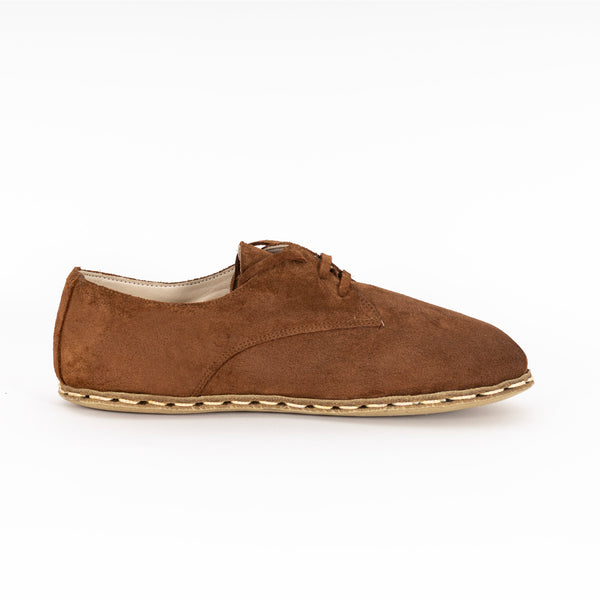
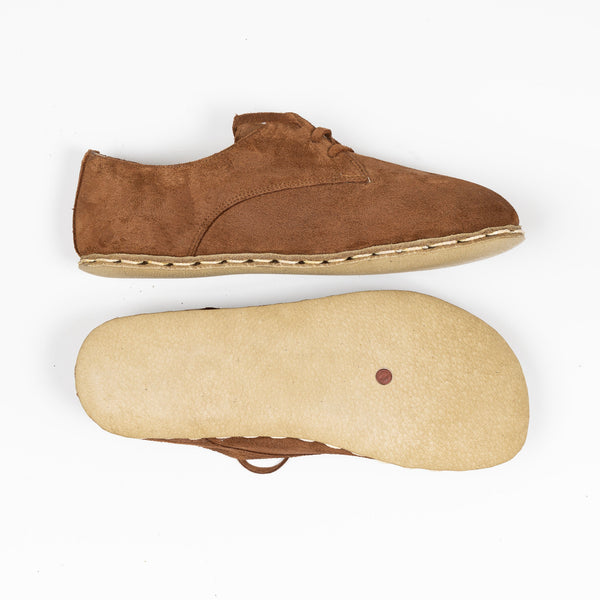
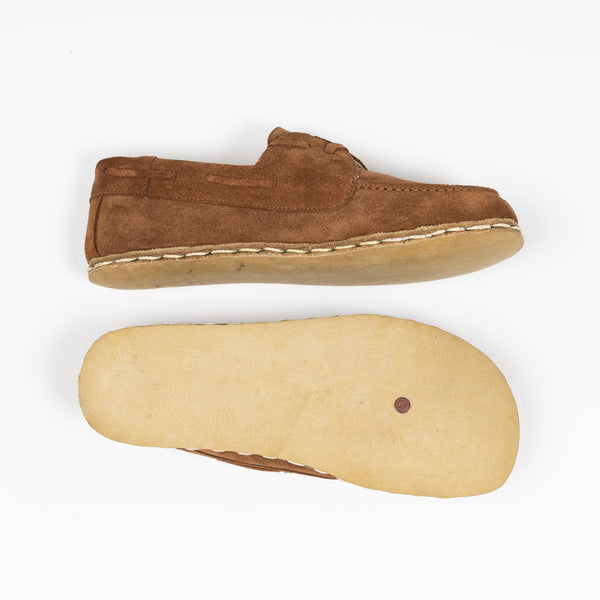
A grounded shoe puts the path back, and the mechanism is deliberately dull. A solid copper rivet runs straight through the sole to the footbed under your skin — one continuous metal path. No coating, no wires, no battery, nothing to switch on or replace. Earth, copper, skin.
Whether that contact changes how you feel is a question researchers are still working on, and we are not going to settle it in a product description. What we will tell you is exactly what the shoe does: it conducts. Every pair goes on an LED continuity tester before it leaves the atelier — the lamp lights only if current finds a path to your foot — and the resistance reading travels with it on a serialised card.
The peer-reviewed papers are linked further down this page. Read them and make up your own mind.